Culture & Traditions
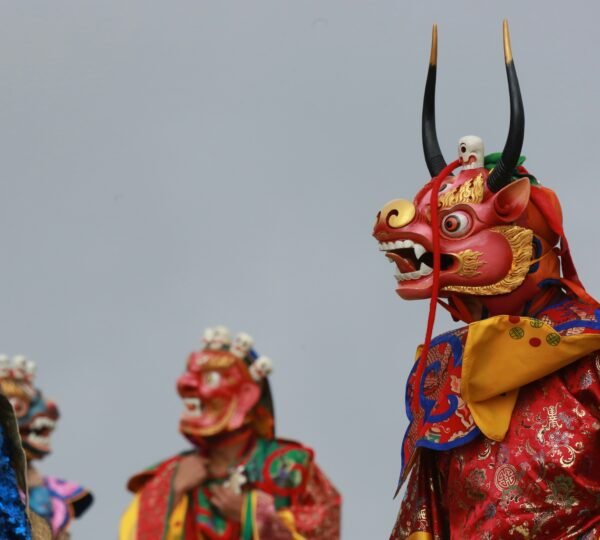
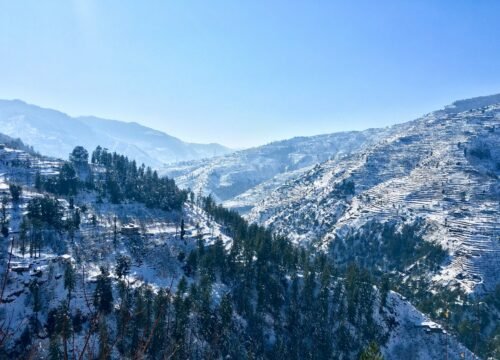
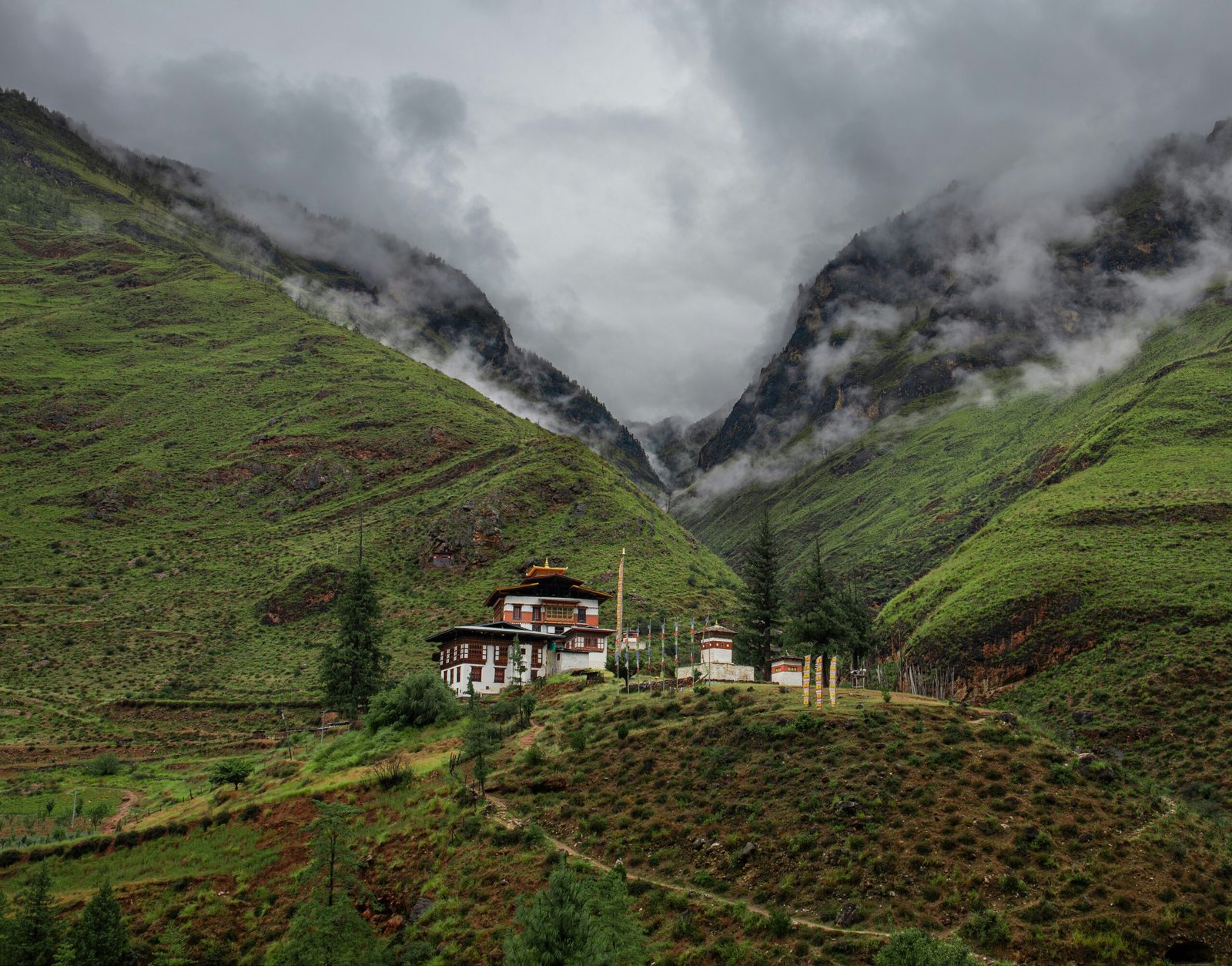
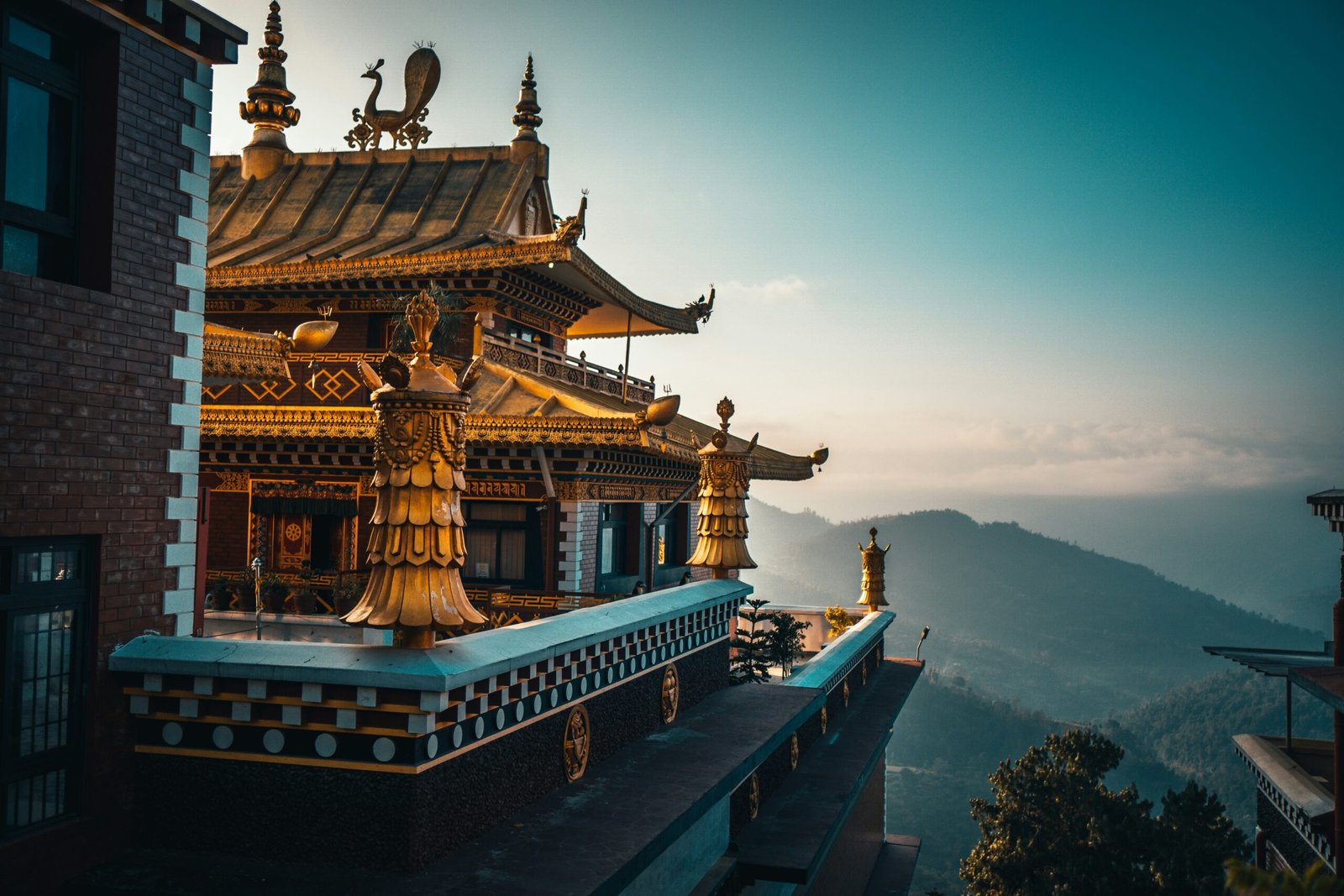
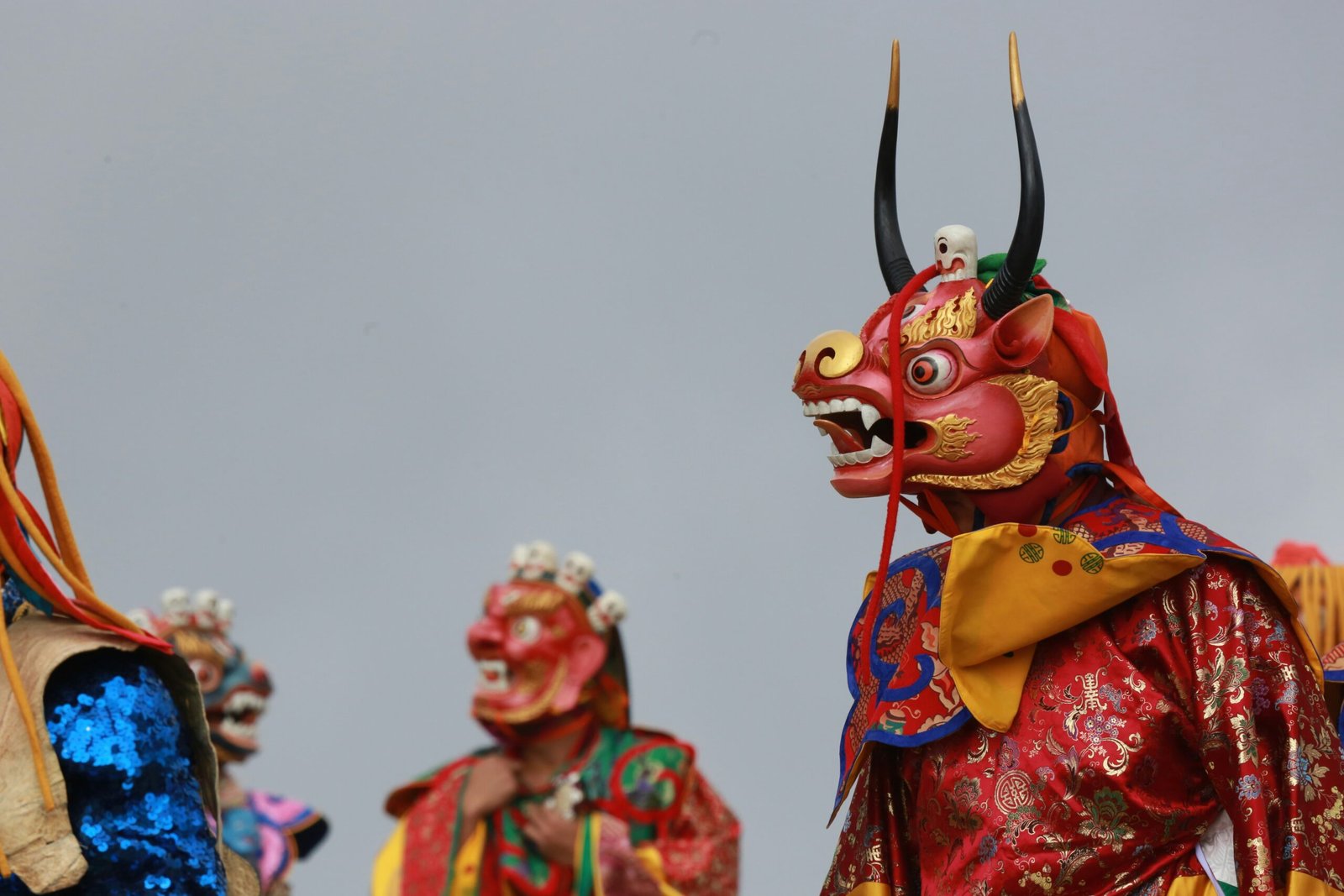
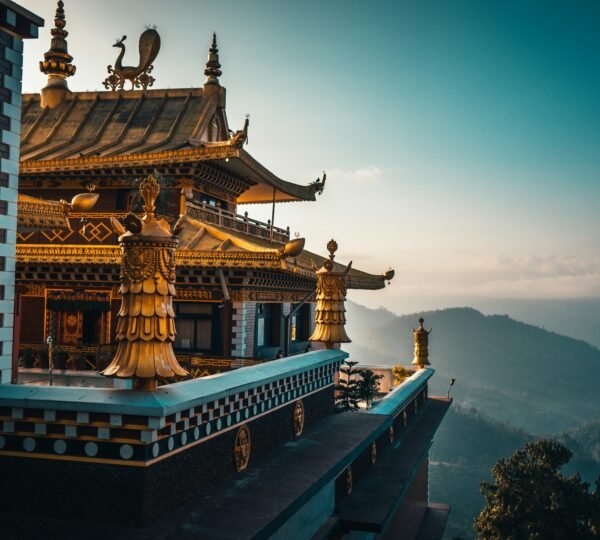
Bhutanese culture is deeply rooted in Vajrayana Buddhism, which shapes daily life, art, and architecture. Colorful monasteries, dzongs (fortresses), and chortens (stupas) dot the landscape. Festivals like Paro Tshechu and Thimphu Tshechu are celebrated with vibrant mask dances, traditional music, and elaborate costumes. The people, known for their warm hospitality, dress in traditional attire—the Gho for men and Kira for women.
Tour Plan
Day 02: Phuentsholing to Thimphu (5 Hrs drive)
Start the scenic journey towards Thimphu. The feeling of exhausted and crowded in Phuentsholing comes to the end after half an hour drive uphill, you will start feeling fresh and enjoy the scenic beauty of the nature. The journey will pass through some of the most beautiful broad leaves forest to temperate alpine zone, villages, towns, water fall, hills and mountains until we reach Thimphu, creating the history for you. Roadside Stops: Leg stretch break for having tea/coffee, using restroom and taking photographs at scenic places like waterfalls, landscapes, and villages. Chuzom- Meeting point of two rivers (Thimphu & Paro) this is tri junction of highway leading to Thimphu, Paro and Phuentsholing into three directions. Enjoy the lovely picture of beautiful portrait of our King and Queen placed at Chuzom which is so welcoming to all who visits Bhutan. We will explore the city by walk: If time permits, walking through the city gives you immense joys and understanding of modern city. Good option for imported garments and local souvenir, beside unique local handicrafts. Thimphu offers mixed style of personalities taking the street walk in Thimphu- only city in the world without traffic lights. Overnight in Thimphu, altitude 2400m
Day 03: Thimphu Sightseeing
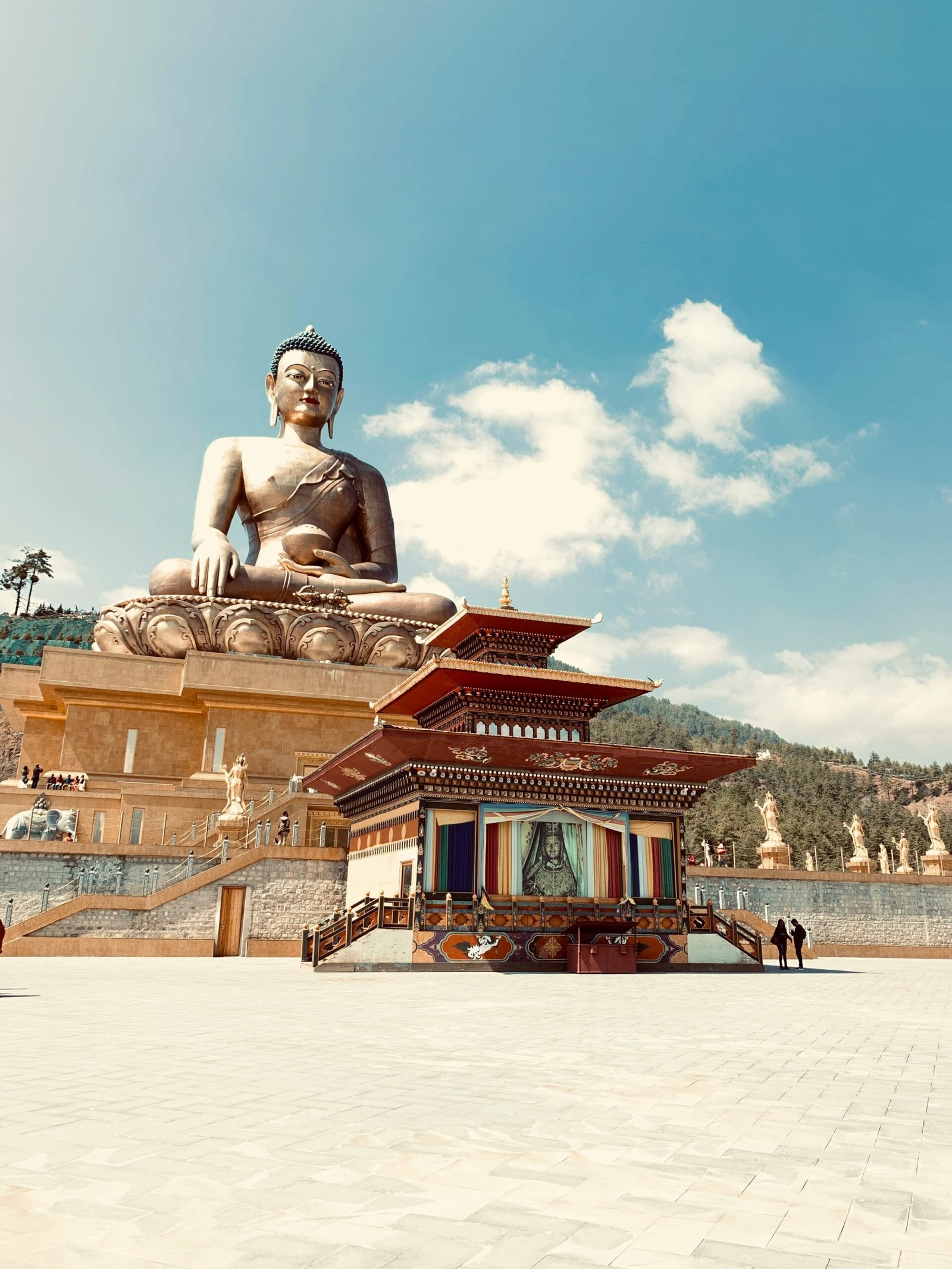
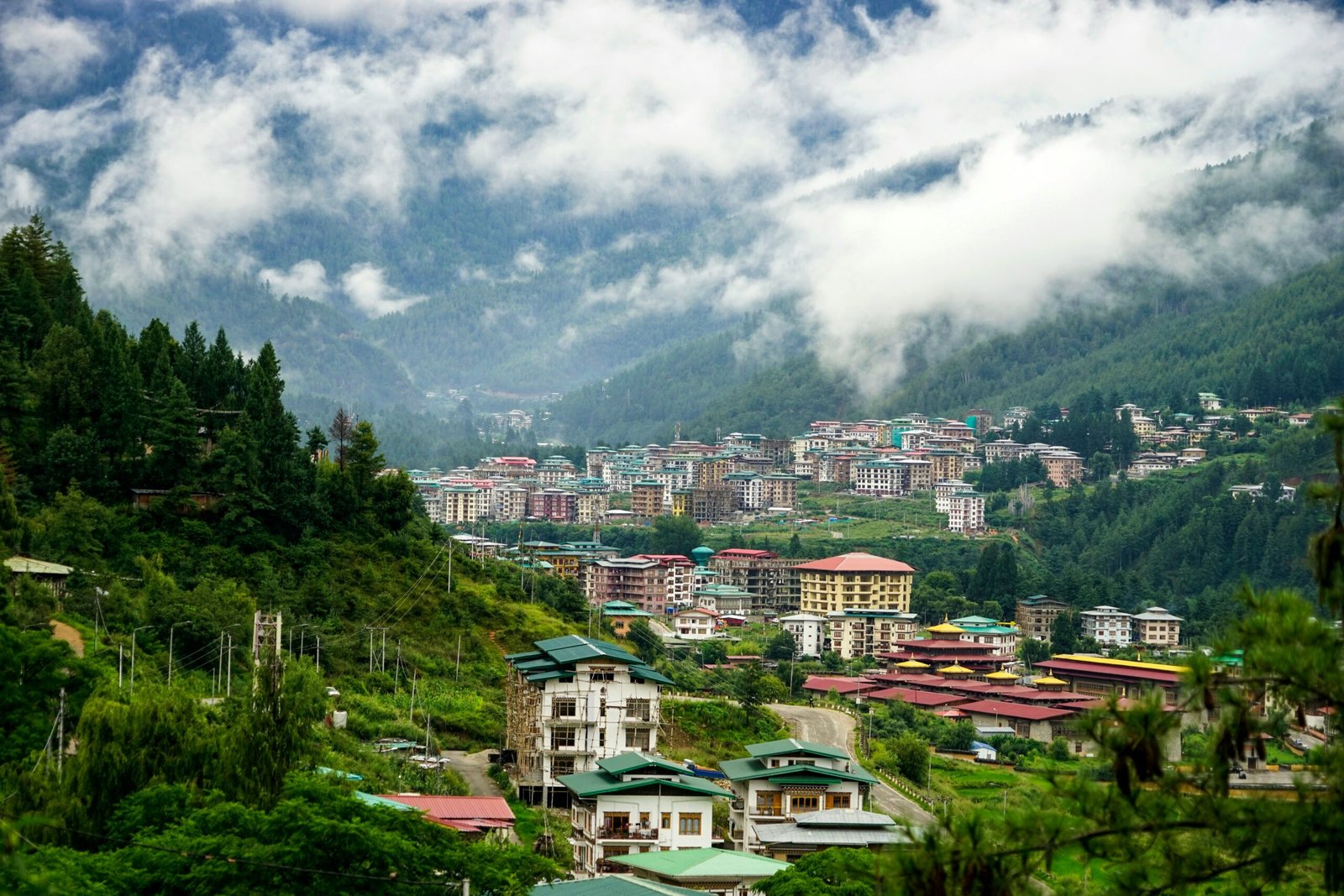
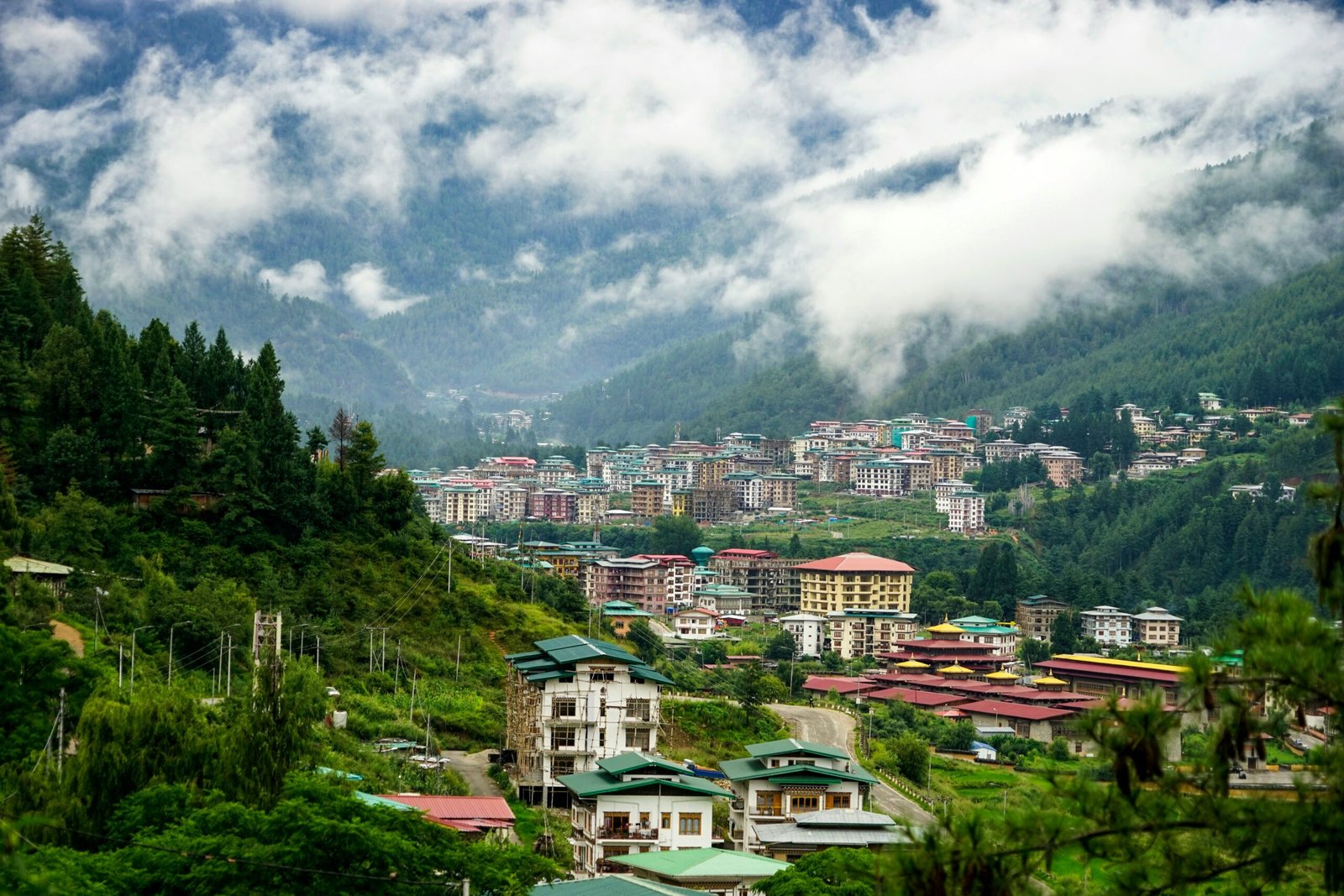
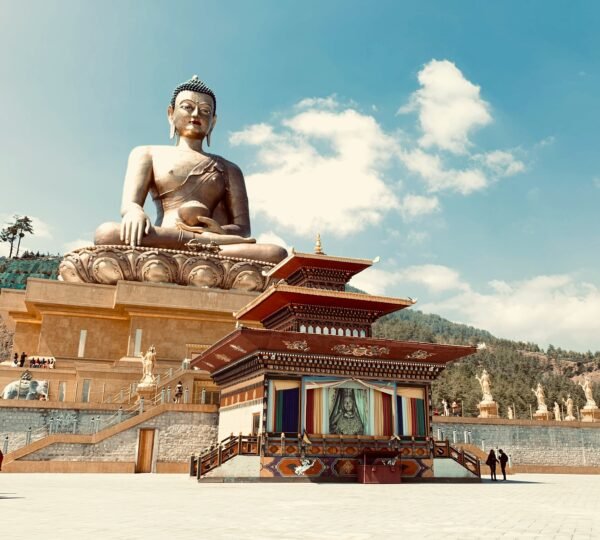
Thimphu- This bustling little city is the main center of commerce, religion and government in the country. Thimphu is the most modern city with an abundance of restaurants, internet cafes, nightclubs and shopping centers. However, it still retains its cultural identity and values amidst the signs of modernization, often referred as world’s only city without traffic lights. Visit Buddha viewpoint: The Buddha Dordenma is located at a top of the hill in Kuensel Phodrang Nature Park and overlooks the southern entrance to Thimphu valley. Simply Bhutan: Simply Bhutan is a living museum and photo studio that gives a good guided introduction to various aspects of Bhutanese traditional lives. Visitors are greeted with a shot of local arra (rice spirit), before being guided through mocked-up village scenes. Along the way, you can dress up in traditional clothes, try out archery and hear songs sung by Bhutanese women as they build houses out of rammed earth. Zilukha Nunnery: Built more than half a century ago, Zilukha Nunnery is also known as Druthob Goemba. Housing around 60 nuns in its premises, a visit to the site energizes the soul because of its peaceful surroundings, which lures one’s mind to never leave the site. From here, the spectacular view of Tashichho Dzong can be captured in a camera to make for a beautiful photo album. Kaja Throm: The riverside Farmer’s Market, one can get fresh farm produce, food & snack stalls, fun art installed by VAST Bhutan. A lively place to spend time with a great ambience. Overnight in Thimphu
Day 04: Thimphu to Punakha (2 Hrs drive)
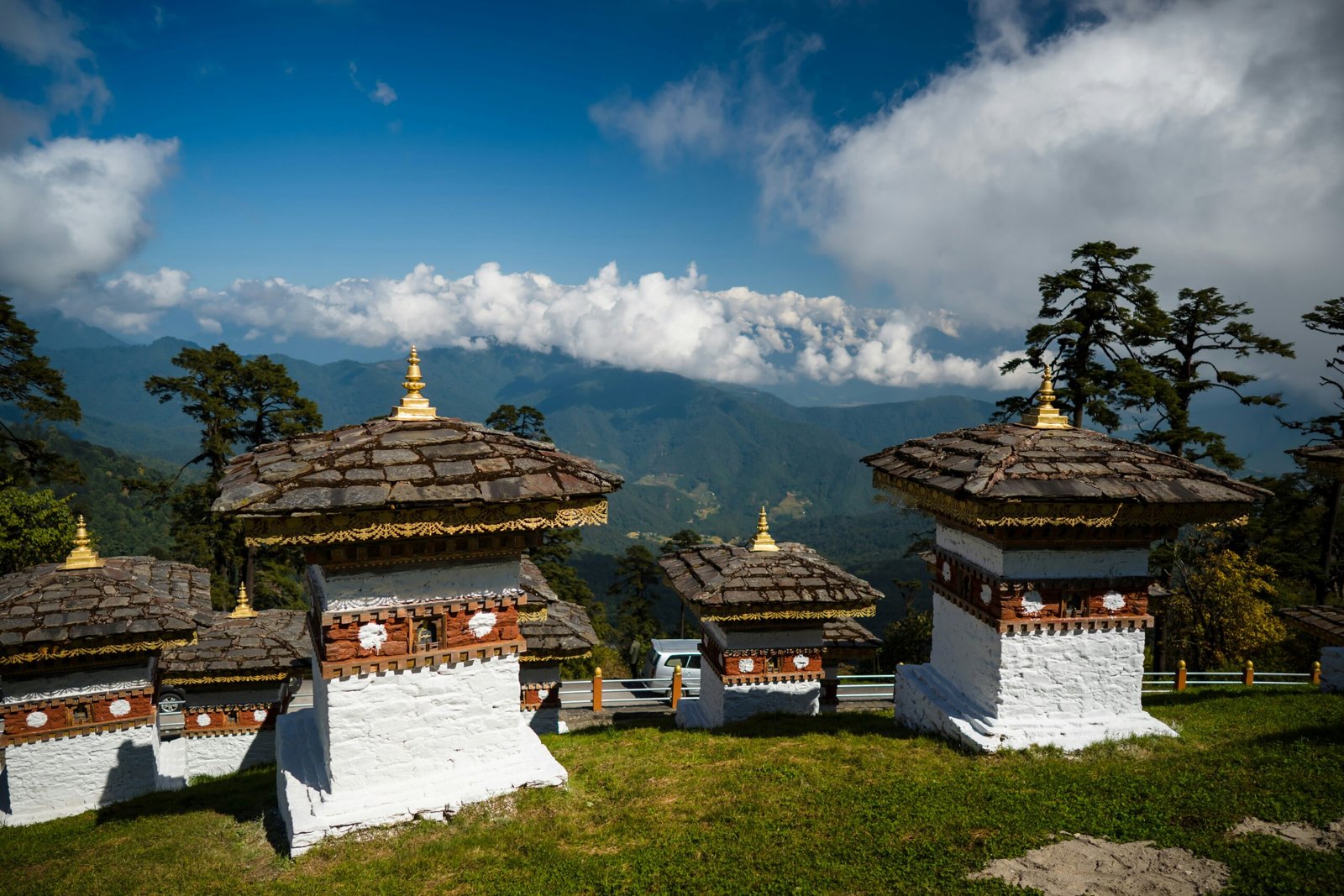
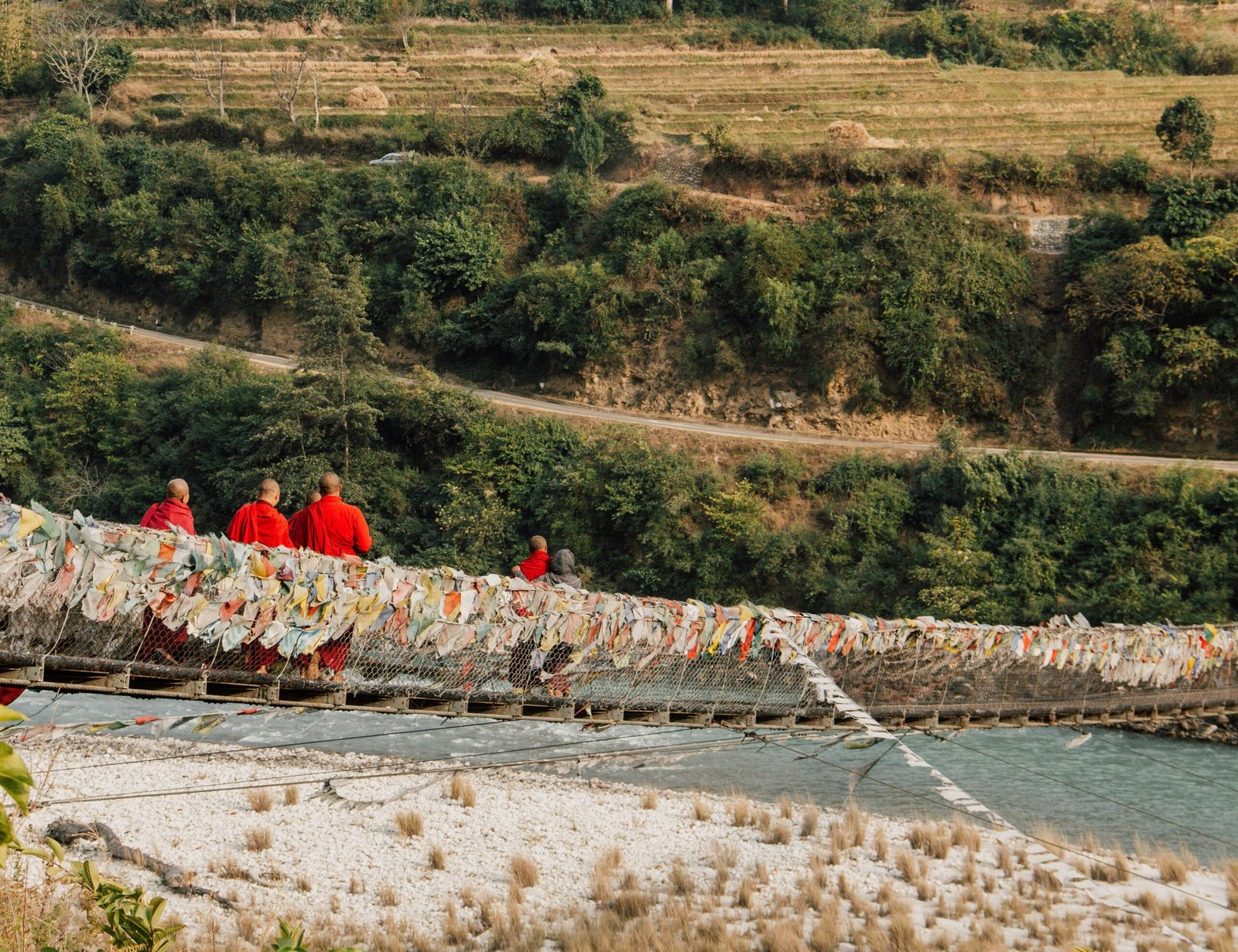
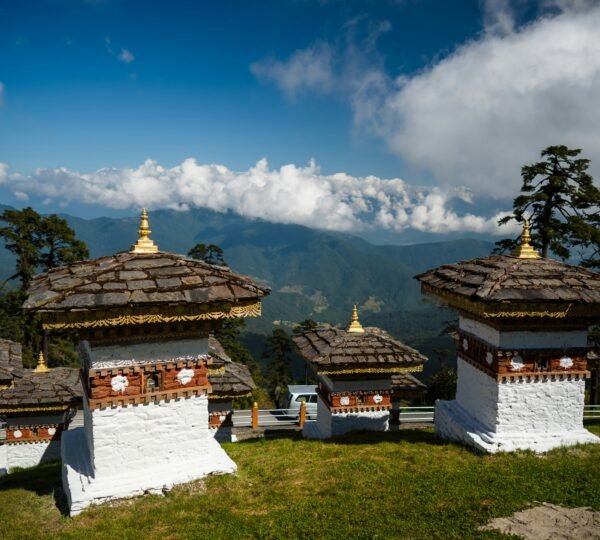
Start the most scenic drive to Punakha from Thimphu over dochula pass which takes about two hours. After the break at Dochula, the road descends into Wangdue and Punakha taking us to one of the warmest places of Bhutan. Dochula pass: The pass is at a popular location as it offers a stunning 180-degree panoramic view of the Great Himalayan mountain ranges. The view is especially scenic and very clear on winter days with snowcapped mountains forming a majestic backdrop to the tranquility of the 108 chortens gracing the mountain pass. Punakha Dzong: Built in 1637 by Zhabdrung Ngawang Namgyal, the Dzong was named Druk Pungthang Dechen Phodrang (Palace of Great Happiness). Punakha is still the winter residence of Je-Khenpo, religious head of Bhutan. King Jigme Dorji Wangchuck convened the first National Assembly here in 1952. This is one of the finest and must see Dzongs of Bhutan. The Dzong stands in between meeting point of two rivers, Phochu and Mochu making the most photogenic Dzongs of Bhutan. Visit Punakha Suspension Bridge: Punakha suspension bridge is considered one of the longest of its kind in Bhutan. The bridge connects the dzong with the villages Shengana, Samdingkha and Wangkha on the other bank of the Po Chhu river. In these small villages, locals sell their wares in tiny, traditional shops. Visitors can stop here for a quick and authentic view of true Bhutan. In order to access the suspension bridge from the dzong, one must walk past the King’s palace and the cremation ground. Overnight in Punakha, altitude 1350m
Day 05: Punakha to Paro (4 Hrs Drive)
Visit 17th century Paro Dzong: ‘Fortress on a Heap of Jewels’, is ranked one of the best Bhutanese architecture. The massive buttressed walls that tower over the town are visible throughout the valley, particularly when landing at Paro Airport. The Dzong also offers administrative seat of the district of Paro. The Dzong was built in 1644 under the order of Zhabdrung Ngawang Namgyal. Ta Dzong unique national museum: Perched above Paro Dzong it was watchtower built in 1649 to protect the undefended Paro Dzong located below, renovated in 1968 to house the National Museum. Today this museum houses the best collections of all-time historical items making worth for a visit. Enjoy outdoor activities wearing Gho/Kira, play archery: Nicely made and well-maintained activity place attached to whole sell Buddha statue store, offers wearing Bhutanese dress, playing archery and darts for guests visiting Bhutan. The center is maintained and operated by HBT herself and its free of cost for all HBT guests. Explore the tiny town: Tiny Paro town actually can offer lot more, there are many authentic handicraft shops, readily available Bhutan made products, grocery and imported garment shops beside having many small restaurants around. Overnight in Paro, altitude 2200m
Day 06: Paro Sightseeing
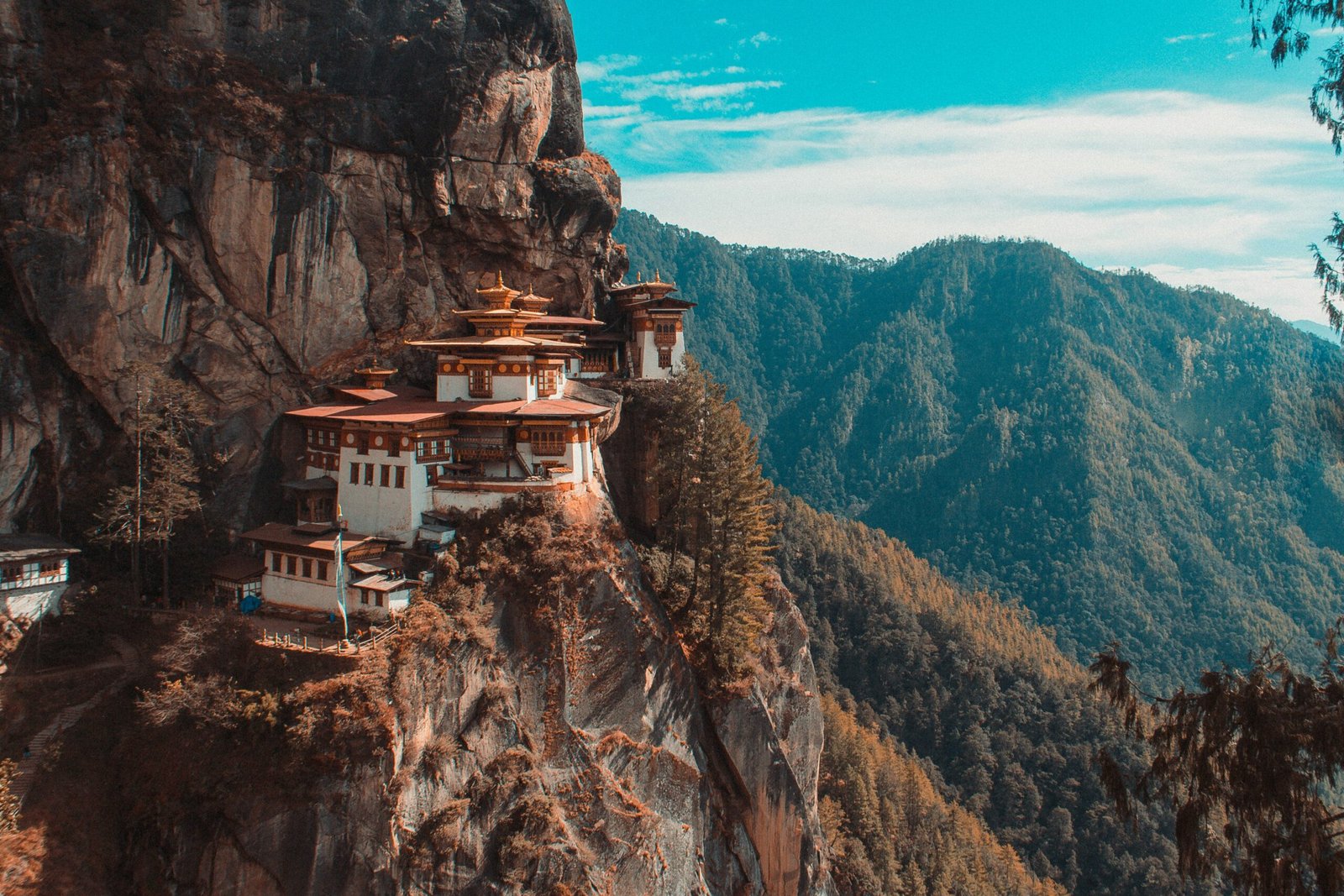
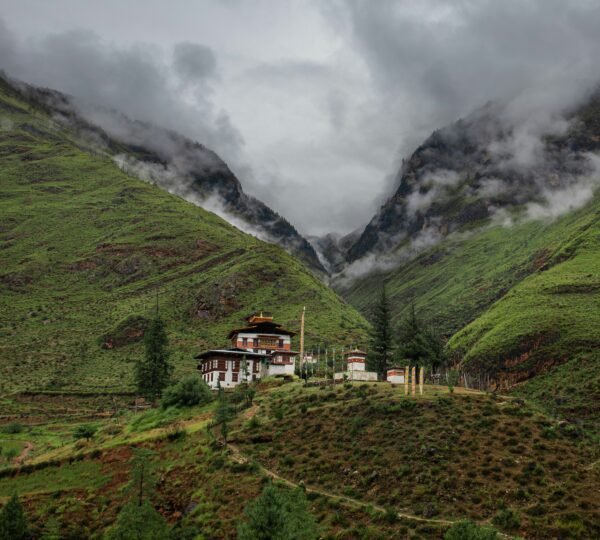
This picturesque region in the kingdom is covered in fertile rice fields and has a beautiful, crystalline river meandering down the valley. Paro has more of historical sites, high-end tourist resort and many souvenir shops for shopping including world famous Taktsang. Taktsang Monastery (Tiger Nest Temple): is Bhutan’s most iconic landmark and religious Buddhist site in the world. The name Taktsang translates to “The Tiger’s Nest”. The temple is one of the holiest sites in Bhutan which clings impossibly to a sheer cliff face 900 meters above the valley. Although good trekkers can make it to the top in two hours, most of the guests take whole day to complete the hike. Overnight in Paro
Day 07: Paro to Phuentsholing (6 Hrs drive)
After the breakfast, drive back to Phuentsholing. Phuentsholing is also good for buying inexpensive Bhutanese souvenirs and agro products for your relatives back home. Prepare yourself to exit from Bhutan. Roadside Stops: Leg stretch break for having tea/coffee, using restroom and taking photographs at scenic places like waterfalls, landscapes, and villages. Kharbandi/Rinchending Gompa (based on your interest)- Monastery is built by Royal Grandmother in 1967. It is located on a picturesque hill overlooking the whole Phuentsholing town and beyond Toorsa River far into distant till the sight disappears into a mountain. The site serves as an idle place to take photos with the town and the mountains acting as a perfect background.
Day 08: Phuntsholing to Bagdogra
Departure from Phuentsholing to Bagdogra Airport (4 Hrs)